

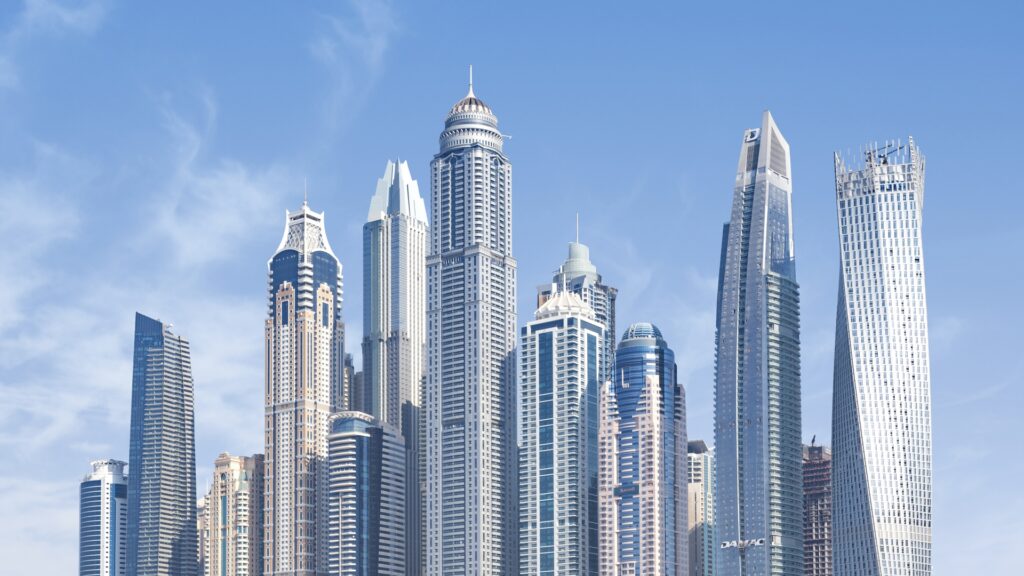
The dream of transitioning from a tenant to a homeowner in the UAE is becoming more capital-intensive. As of early 2026, market data reveals that the typical Dubai home upfront requirement has surged to approximately Dh300,000 for a standard entry-level property. With property prices in areas like JVC, Town Square, and Arjan witnessing double-digit growth over the last 12 months, first-time buyers must now recalibrate their savings strategies to meet the higher down payment and transactional thresholds required by UAE banks and regulators.
The Dh300,000 Breakdown: More Than Just a Deposit
While many buyers focus solely on the 20% down payment, the reality of a Dubai home upfront cost includes several mandatory government and service fees. For an entry-level apartment priced at Dh1.5 million—the new 2026 sweet spot for first-time buyers—the cash requirement is broken down as follows:
| Expense Type | Percentage/Fee | Estimated Amount (Dh) |
| Minimum Down Payment | 20% (For Expat First-Timers) | Dh300,000 |
| DLD Transfer Fee | 4% of Property Value | Dh60,000 |
| Agency Commission | 2% + VAT | Dh31,500 |
| Trustee & Admin Fees | Fixed Charges | Dh5,000 |
| Mortgage Registration | 0.25% of Loan Amount | Dh3,290 |
| Total Cash Required | Approx. 26-27% Total | Dh399,790 |
Note: While Dh300,000 covers the bank’s deposit requirement, a buyer actually needs closer to Dh400,000 in liquid cash to close the deal comfortably.
Income and Mortgage Eligibility in 2026
Securing the Dubai home upfront amount is only half the battle. In 2026, UAE banks have tightened their Debt Burden Ratio (DBR) assessments. To qualify for a mortgage on a Dh1.5M property, most lenders now look for a minimum monthly household income of Dh30,000 to Dh35,000.
With interest rates stabilizing between 4.2% and 5.5%, monthly EMI payments for such a property typically hover around Dh6,500 to Dh7,500. Prospective owners must ensure that these payments, combined with annual service charges (averaging Dh15–Dh25 per sq. ft.), do not exceed 50% of their total monthly take-home pay.
Why Costs Are Rising
Several market forces are driving the increase in the Dubai home upfront benchmark:
- Supply vs. Demand: Despite 120,000 units being scheduled for handover in 2026, high-quality ready units remain scarce, pushing prices up.
- Population Growth: A steady influx of foreign professionals has kept the rental market high, forcing many to consider buying, which further inflates entry-level prices.
- Maturing Market: Dubai’s real estate sector is maturing into a more stable, “end-user” dominated market, where banks prioritize buyers with higher equity.
Strategic Tips for First-Time Buyers
To navigate the high Dubai home upfront costs, experts suggest:
- Off-Plan Options: Look for “post-handover” payment plans where the initial deposit might be as low as 10%, though you must account for the 4% DLD fee payable immediately.
- Developer Incentives: Some developers in 2026 are offering “DLD Waivers” (paying the 4% fee on your behalf) to attract first-time buyers.
- Secondary Market Negotiation: In some cases, the 4% DLD fee can be split between the buyer and seller, though this is rare in a seller’s market.
Conclusion
Ownership in Dubai remains one of the best long-term investments globally, offering tax-free capital gains and high rental yields. However, the days of entering the market with Dh150,000 are largely gone. For those planning a Dubai home upfront purchase this year, the target is clear: aim for a Dh300,000 to Dh400,000 liquidity buffer to turn the key to your own front door.