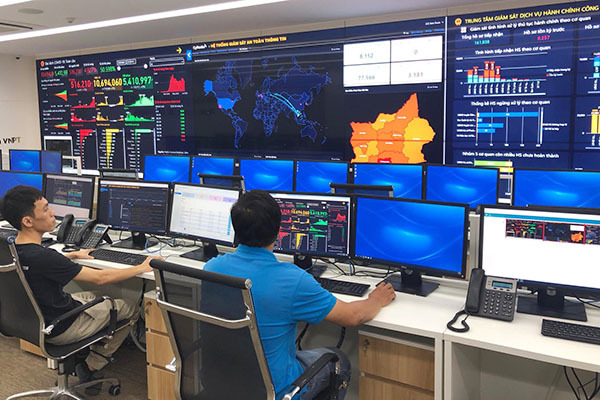


AI cybersecurity 2026 is the defining tech battleground for next year: attackers will use more autonomous AI tools while defenders scale up AI-driven detection, confidentiality techniques and governance. Organisations that plan now can turn these shifts into strategic advantage — especially in the Gulf, where rapid digitalisation and strong government cybersecurity programmes raise both stakes and opportunities.
What will change in 2026 — the headline shifts
- Agentic AI supercharges attacks. Criminal groups will increasingly string together autonomous AI agents to automate phishing, social engineering, reconnaissance and exploit chaining — producing larger, faster, and more personalised waves of attacks. This is already being reported as a rising threat pattern in 2025–2026 commentary. IT Pro+1
- Defensive AI becomes mainstream. Security teams will move from AI-assisted pilots to AI-first detection and response platforms (automated triage, runtime protection, and AI orchestration for incident playbooks), making response times dramatically faster for organisations that invest correctly. Industry roadmaps point to ‘preemptive cybersecurity’ and AI-native security platforms as strategic defaults for 2026. Gartner+1
- Confidential & governed computing expands. Protecting sensitive models and data in untrusted environments (confidential computing, secure enclaves, and stronger data provenance) becomes a competitive requirement for regulated sectors, including finance, healthcare and government. Gartner highlights confidential computing and data governance as priority trends into 2026.
Why the Gulf (UAE, KSA, Qatar) must pay attention
The Gulf is already accelerating digital transformation — smart cities, fintech, and hospitality scale — which raises attack surface and value of data. The UAE and Dubai have updated national strategies and events (e.g., CYSEC, Dubai Cyber Security Strategy) that prioritise resilience, AI governance and public–private cooperation; this local momentum both increases investment in defence and makes the region a higher-value target for advanced adversaries. Gulf organisations that align with national frameworks will be better positioned to attract talent, investment and regulatory goodwill.
Practical benefits and opportunities in 2026
- Faster threat detection & fewer false positives: Well-trained AI models reduce analyst fatigue and focus human effort on high-value investigations. McKinsey & Company
- Automated compliance & continuous audit: AI can map regulatory requirements (e.g., data residency, privacy) to system controls, making audits cheaper and faster.
- Adaptive prevention for cloud & OT: Confidential computing + model hardening help protect cloud workloads and critical infrastructure control systems as they adopt AI-enabled automation.
Main risks to manage
- Model exploitation & poisoning: Attackers will try to corrupt training data and manipulate model outputs (supply-chain and training-time risks).
- Tool misuse and scale: Agentic systems can run unchecked attacks that adaptive malicious actors profit from. Defensive teams must assume attackers will use the same capabilities.
- Skills & governance gap: Demand for AI-security engineers, MLops-security and privacy engineers will outpace supply unless organisations invest in training and strategic hiring.
A practical 2026 readiness checklist for Gulf organisations
- Adopt AI-driven detection with human-in-the-loop — deploy models for prioritisation but keep analysts for verification and escalation.
- Use confidential computing & data provenance for sensitive ML workloads and regulated data.
- Harden supply chains and model pipelines — vet datasets, sign models, and require provenance for third-party AI services.
- Update incident response for agentic threats — run tabletop exercises assuming autonomous attack chains.
- Embed regulatory compliance in DevSecOps — map local UAE/KSA rules into CI/CD guardrails and audit logs.
What leaders must do (CISOs, CTOs, Execs)
- Invest now, iterate fast. Prioritise projects that automate containment and visibility (EDR/XDR + AI orchestration).
- Partner with national initiatives. Work with government cybersecurity programmes and local events (CYSEC, Intersec) to stay aligned and influence standards.
- Design ethical guardrails. Build model governance for explainability, traceability and red-team testing to reduce reputational and legal risk. World Economic Forum Reports
The future outlook — optimistic but conditional
By the end of 2026, organisations that combine strong governance, AI-enabled defence, and local partnerships should see higher resilience, lower dwell times, and better regulatory posture. However, failure to act will expose firms to faster, AI-enabled campaigns that increase financial and reputation loss. The net effect will be an arms race where speed, data hygiene and governance determine winners.