

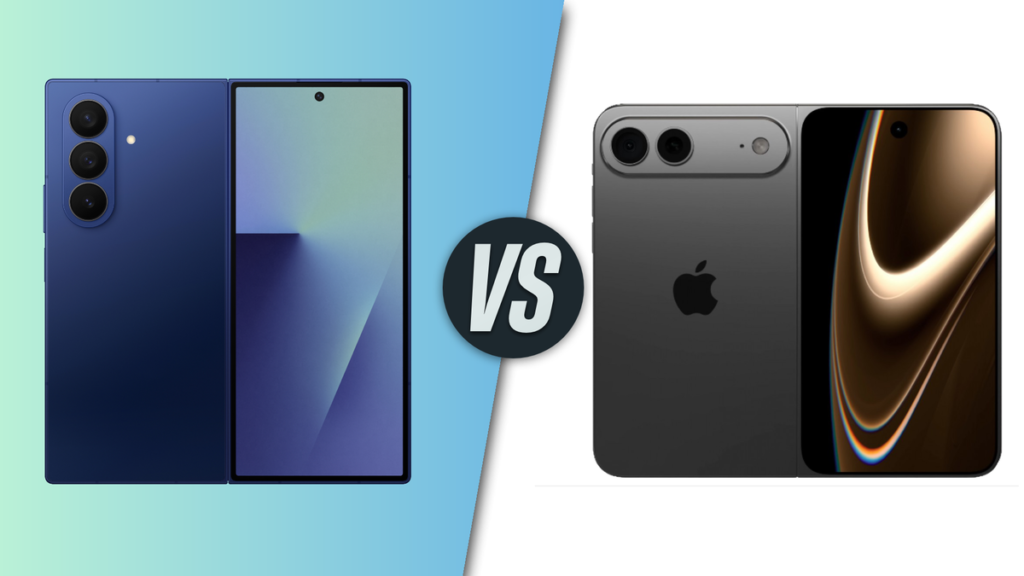
The foldable phone market is entering a major new phase in 2026. Samsung has officially launched the Galaxy Z Fold 8, while Apple is expected to introduce its first foldable iPhone later this year. That makes the Galaxy Z Fold 8 vs iPhone Fold comparison one of the most interesting smartphone battles of the year.
Samsung’s new Fold 8 has moved toward a shorter, wider design, while Apple’s rumored foldable iPhone is expected to use a similar book-style format with a large inner display.
So, which one could be better? Here’s everything you need to know about the design, display, performance, cameras, durability, software, and expected pricing.
Galaxy Z Fold 8 vs iPhone Fold: Quick Comparison
| Feature | Galaxy Z Fold 8 | Apple Foldable iPhone |
|---|---|---|
| Status | Officially available | Expected in 2026 |
| Design | Book-style, shorter and wider | Rumored book-style |
| Cover display | 5.5-inch | Around 5.5-inch rumored |
| Inner display | 7.6-inch | Around 7.8-inch rumored |
| Main display ratio | 4:3 | Around 4:3 rumored |
| Processor | Snapdragon 8 Elite Gen 5 for Galaxy | Expected A-series chip |
| Software | Android 17 / One UI 9 | iOS |
| Weight | 201g | Rumored to be very thin |
| Starting price | $1,899 | Expected $2,000+ |
| Availability | August 7, 2026 | Expected September 2026 |
Apple’s specifications remain based on reports and leaks until the company officially announces the device, so the final hardware could change.
Galaxy Z Fold 8: Samsung’s New Wide Design
One of the biggest changes to the Galaxy Z Fold 8 is its form factor.
Samsung has moved away from the taller, narrower design used by earlier generations and introduced a shorter, wider Galaxy Z Fold 8. The main screen measures 7.6 inches with a 4:3 aspect ratio, while the cover screen measures 5.5 inches.
The wider design makes the phone feel more like a small tablet when opened and more comfortable for typing, reading, watching content, and multitasking.
It also weighs about 201 grams, making it the lightest Galaxy Z Fold to date.
Apple Foldable iPhone: What to Expect
Apple’s first foldable iPhone is widely expected to use a book-style design rather than a clamshell format.
Current reports point toward an approximately 5.5-inch outer display and 7.8-inch inner display, with a 4:3-style aspect ratio. A thin design, minimized crease, titanium-and-aluminum construction, and a price above $2,000 have also been reported.
However, these remain pre-launch specifications.
Apple Foldable iPhone Release Date
The Apple foldable iPhone release date is currently expected to fall in September 2026, alongside the iPhone 18 Pro generation. Supply-chain reporting has also indicated that Apple remains on track for a September introduction.
That means Samsung has a significant advantage right now: the Galaxy Z Fold 8 is already available, while Apple’s foldable remains officially unannounced.
Galaxy Z Fold 8 vs iPhone Ultra: Display
Display technology could be one of the most important parts of this comparison.
Samsung’s Galaxy Z Fold 8 has a 7.6-inch 120Hz Dynamic AMOLED 2X inner display with a 4:3 ratio. Samsung says its new Flex Titanium display structure also helps make the device thinner while reducing the visibility of the crease.
Apple’s rumored foldable iPhone is expected to feature a roughly 7.8-inch internal display and a minimized crease.
If Apple’s final display specifications match current reports, the Galaxy Z Fold 8 vs iPhone Ultra battle could be extremely close for large-screen productivity and media consumption.
Performance and AI
Samsung’s Galaxy Z Fold 8 uses the Snapdragon 8 Elite Gen 5 for Galaxy and ships with Android 17 and One UI 9. It also includes Galaxy AI features designed around the foldable form factor.
Apple’s foldable iPhone is expected to use a new-generation A-series chip and Apple’s own AI and software ecosystem.
The bigger difference may therefore come from software rather than raw processing power.
Samsung has years of experience optimizing Android for large foldable displays, while Apple will have the opportunity to design iOS specifically around its first foldable form factor.
Cameras: Samsung Has a Head Start
The standard Galaxy Z Fold 8 features a dual rear camera system, including a 50MP wide camera and 50MP ultrawide camera.
Apple’s exact camera configuration has not been officially confirmed. Current reports suggest a premium camera setup, but this is an area where buyers should wait for Apple’s official announcement.
Samsung’s advantage is simple: its camera hardware and real-world performance can already be evaluated.
Foldable Phone Display Durability
Durability remains one of the biggest questions when comparing foldable smartphones.
The flexible display and hinge have to survive thousands of folding cycles while maintaining image quality and touch responsiveness.
Samsung has continued to improve this area with the Z Fold 8. Its new display structure and Flex Titanium technology are designed to improve durability while also making the crease less noticeable.
Apple is rumored to be focusing heavily on hinge durability and a nearly invisible crease, but those claims cannot be properly evaluated until the device reaches consumers.
For now, Samsung has the advantage of having an established foldable engineering track record.
Price: Apple Could Be More Expensive
The Galaxy Z Fold 8 starts at $1,899 in the U.S. for 256GB storage. Samsung also offers 512GB and 1TB configurations.
The foldable iPhone is expected to cost more than $2,000, with some reports suggesting a price significantly above that level.
If those estimates prove accurate, Samsung could offer better value for buyers who want a premium foldable without moving into Apple’s rumored price range.
Galaxy Z Fold 8 vs iPhone Fold: Which One Should You Buy?
The answer depends heavily on your ecosystem.
Choose Galaxy Z Fold 8 if:
- You want a foldable phone available right now.
- You prefer Android and Samsung’s One UI.
- You want a wide 7.6-inch inner display.
- Multitasking is a major priority.
- You want S Pen-compatible productivity features and Galaxy AI.
- You want a premium foldable below the expected price of Apple’s model.
Wait for the iPhone Fold if:
- You’re already heavily invested in Apple’s ecosystem.
- You prefer iOS.
- You want Apple’s first foldable design.
- You value seamless integration with other Apple devices.
- You’re comfortable waiting for Apple’s official specifications and pricing.
Best Premium Foldable Phones 2026: Where Samsung Fits
The best premium foldable phones 2026 category is becoming increasingly competitive.
Samsung’s Fold 8 is particularly strong because it combines a lighter design with a wider form factor, powerful hardware, a mature foldable software experience, and a large internal screen.
But Apple’s entrance could significantly change the premium market. If Apple delivers the thin design, minimal crease, battery life, and software experience expected from current reports, the iPhone Fold could become Samsung’s biggest foldable competitor.
Galaxy Z Fold 8 vs iPhone Fold: Final Verdict
The Galaxy Z Fold 8 vs iPhone Fold battle is shaping up to be less about simply having a folding screen and more about execution.
Samsung already has the advantage of experience. The Galaxy Z Fold 8 is available today, uses a more comfortable wide design, offers a 7.6-inch 120Hz inner display, and starts at $1,899.
Apple, meanwhile, could bring a highly refined first-generation foldable with a roughly 7.8-inch inner screen, a thin body, and deep integration with iOS. But until Apple officially announces the device, its final specifications, price, and iPhone Fold / iPhone Ultra specs remain unconfirmed.
For buyers who need a premium foldable now, the Galaxy Z Fold 8 is the safer choice. For Apple users willing to wait, the first foldable iPhone could be worth watching closely.