

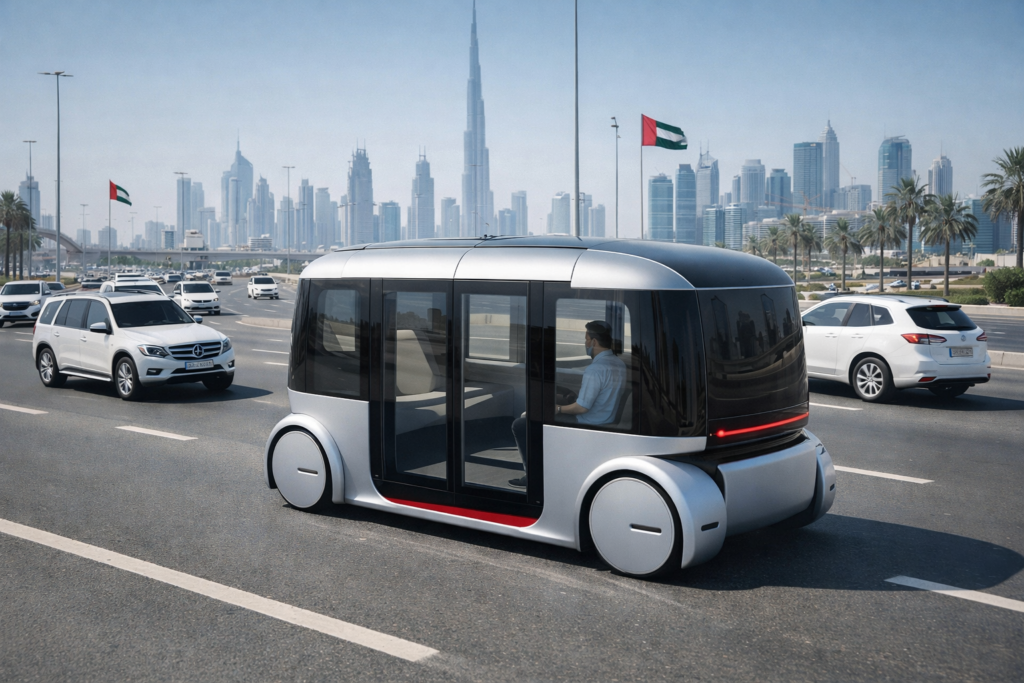
Dubai is officially launching a next-generation automated transit network known as the Glydways transit system. Unveiled during the World Governments Summit in February 2026, this partnership between the Roads and Transport Authority (RTA) and San Francisco-based Glydways aims to revolutionize how we move. Specifically, the system uses autonomous electric pods that operate on dedicated, narrow guideways. Consequently, these pods avoid the daily gridlock of Sheikh Zayed Road, offering a seamless, on-demand travel experience for residents and tourists alike.
How the Glydways Technology Works
Unlike traditional buses that follow a fixed schedule, the Glydways transit system functions more like a high-tech taxi on rails. Notably, each pod can carry four to six passengers and features “virtual platooning” technology. Indeed, this allows up to 10 pods to travel together with just a one-second gap, maximizing capacity without the need for massive train tracks. Furthermore, with a speed of 50 km/h and a 250 km range, these pods are designed for point-to-point travel with zero intermediate stops.
[Image Suggestion: The sleek RTA Glydways pod prototype displayed at WGS 2026]
Planned 2026 Routes and Connectivity
The RTA has already identified four key corridors for the initial rollout. As a result, commuters will soon see these pods bridging the “last-mile” gap between Metro stations and popular destinations.
| Route Name | Connection Points | Distance |
| Bluewaters Pilot | National Paints Metro to Bluewaters Island | 2.8 km |
| Umm Suqeim Link | Mall of the Emirates to Madinat Jumeirah | 1.9 km |
| Al Quoz Corridor | OnPassive Metro to Alserkal Avenue | 2.6 km |
| Festival City | Internal network (future Metro Blue Line link) | 7.0 km |
Why This is a “Win” for Dubai
The economic and environmental impact of the Glydways transit system is massive. Notably, it costs up to 90% less to build than traditional rail and reduces operational expenses by 70%. Moreover, because the pods are fully electric, they align with the Dubai Autonomous Transportation Strategy’s goal to make 25% of all trips driverless by 2030. Therefore, passengers can expect fares to be as affordable as a standard Metro ticket, payable via their existing Nol cards.
The Competition: Glydways vs. Dubai Loop
While Glydways handles surface and elevated pod travel, the 2026 summit also highlighted the Dubai Loop—Elon Musk’s underground tunnel project. Indeed, while the Loop focuses on high-speed underground transit between DIFC and Dubai Mall, Glydways is the “last-mile” hero that gets you from the station to your office door. Together, these projects ensure that by late 2026, Dubai will have the most integrated autonomous network in the world.
Conclusion: A Smarter Way to Commute
In conclusion, the Glydways transit system is not just a fancy gadget; it is a practical solution to urban density. By choosing this on-demand, zero-emission mode of transport, Dubai is setting a global benchmark for smart cities. Notably, with trial operations beginning in the next four months, the dream of a “traffic-free” Dubai is closer than ever. Stay tuned as the RTA continues to test these pods on the Bluewaters route this summer!