

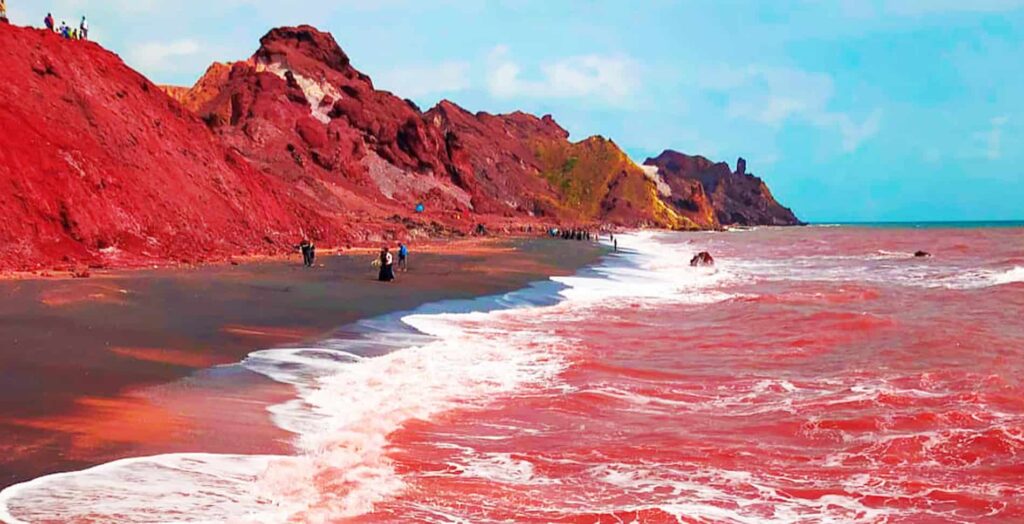
Hormuz Island Red Beach has once again gone viral after heavy rainfall transformed parts of the island’s shoreline into a deep crimson red. The striking natural event, locally known as the Red Beach, has drawn global attention as rainwater washed mineral-rich soil into the surrounding sea, changing the color of both sand and water.
Why Hormuz Island turns red
Hormuz Island, located in southern Iran near the Strait of Hormuz, is famous for its unique geology. The island contains high levels of iron oxide and mineral-rich red soil, locally called Gelack. When heavy rains hit the island, this red soil flows from the hills into the sea, creating a dramatic blood-red shoreline.
This is a natural process, not pollution or algae bloom, making it even more fascinating for scientists and travelers.
Social media reaction and global attention
Videos and images of the red shoreline quickly spread across social platforms, with many viewers comparing the scene to a surreal painting. Tourists and nature lovers praised the phenomenon as one of the most visually stunning natural events in the region.
Is the Red Beach dangerous?
Despite its intense color, the Red Beach phenomenon is completely natural and harmless. The minerals responsible for the color are even used locally in traditional food, art, and cosmetics.
Environmental experts confirm that the event does not pose a threat to marine life and fades naturally once the rains stop and tides normalize.
Why Hormuz Island matters for regional tourism
Hormuz Island has been gaining popularity as a hidden natural wonder of the Middle East. Events like the Red Beach boost eco-tourism and highlight Iran’s lesser-known landscapes, similar to salt mountains and rainbow valleys found on the island.
For Gulf travelers, it represents a unique destination that blends geology, culture, and natural beauty.
Scientific and environmental significance
Geologists consider Hormuz Island an open-air laboratory due to its colorful mineral formations. The Red Beach event offers valuable insight into soil erosion, mineral deposits, and coastal interaction during extreme weather.
Such phenomena also highlight how climate patterns influence natural landscapes in arid regions.