


The handover notice arrives by email, and the message is simple. The final payment is due, the unit is ready, and the developer wants you to accept the keys. For many buyers in Dubai, this is the most exciting message of the whole purchase, and it is also the moment when care matters most.
Before you accept the keys, you get one clear chance to check the home in full. Snagging is the inspection that happens before acceptance. An inspector walks through every room, checks the finish against the sales and purchase agreement, and records each defect in a snag list for the developer to fix.
Defects found after acceptance are far harder to fix. Once you sign the handover form and take the keys, the developer can argue that a scratch, a stain or a loose fitting happened after you moved in. This guide explains what snagging covers, what it costs in Dubai, the steps to follow at handover, and your rights when the developer refuses to
What Snagging Is and Why It Matters at Handover
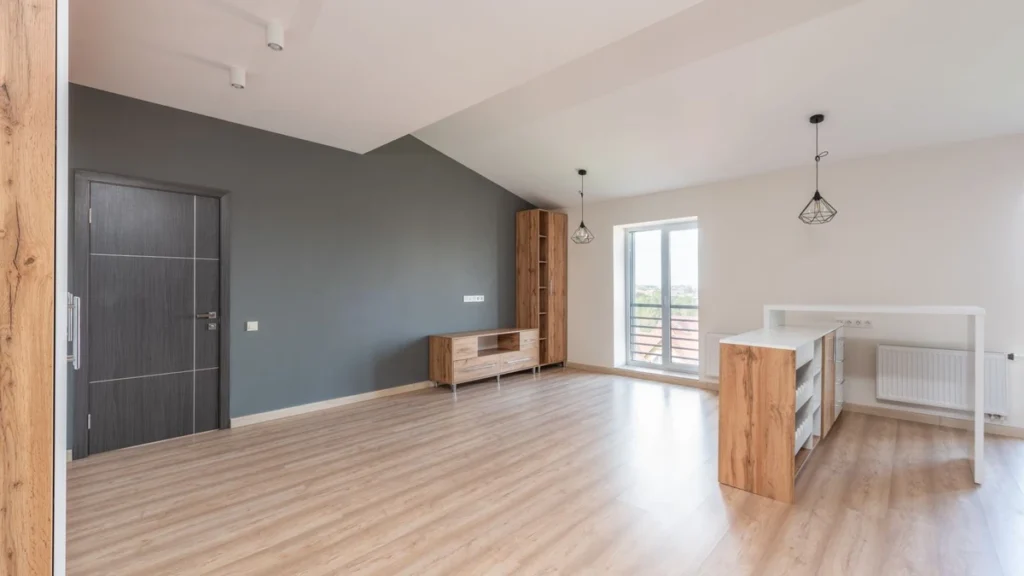
Snagging is a detailed inspection of a new home against the specification in the sales and purchase agreement, which is known as the SPA. The inspector checks what was promised in the contract, room by room, and compares it with what was actually built and finished. Paint, tiles, doors, windows, taps, sockets and air conditioning all form part of the check, along with the general finish of every surface.
Every defect found during the inspection goes into a snag list, which is also called a snag report. The list records each problem, where it is located, and what action the developer must take. A clear snag report gives both sides the same record, and it stops small problems from being forgotten or disputed later. Photos and notes in the report make each item easy to find and easy to check again after repair.
The handover window is the buyer leverage point. At this stage, the developer still holds the keys, the final payment is still in play, and the unit has not yet been accepted. A buyer who raises defects now is in a far stronger position than a buyer who accepts first and complains later. Once the keys change hands, the developer can claim that damage happened after handover, so the inspection must happen first.
What a Snagging Inspection Covers
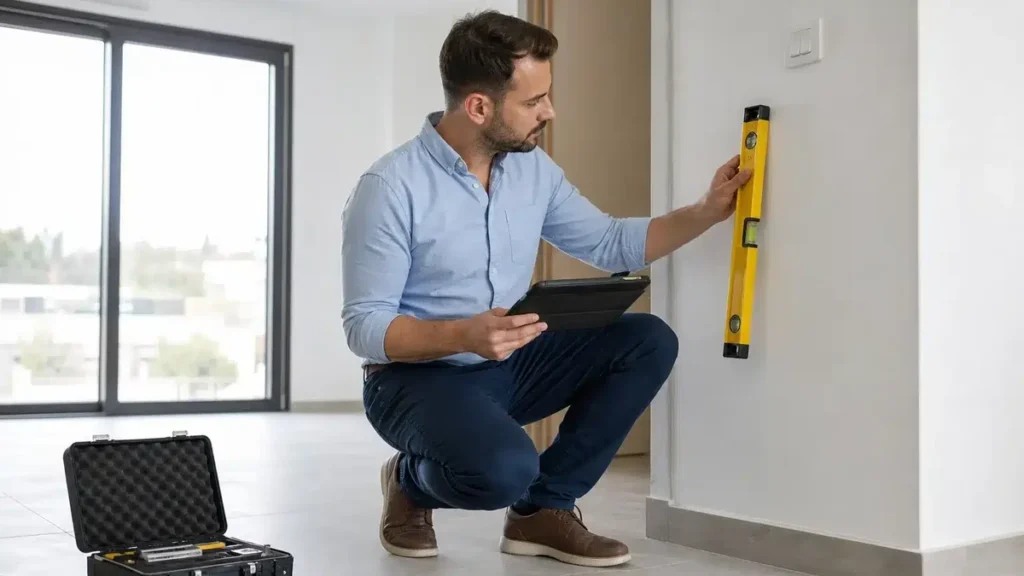
A snagging inspection covers the whole unit, inside and out, and it also covers the balcony and the main fittings. The inspector works room by room so that no area is missed. Each room gets the same careful check, from the ceiling to the floor, and each defect is logged with its exact location.
- Living room: check the walls and paint for cracks, marks and uneven finish, the floor for loose tiles and hollow sounds, and each socket and switch for a firm fit and correct function.
- Bedrooms: check the doors for smooth closing and a clean fit, the windows for locks and seals, the wardrobes for doors and rails, and the paint for drips and patches.
- Kitchen: check the worktops for chips and stains, the cupboard doors and hinges for alignment, the sink for leaks, and each tap for water pressure and a firm base.
- Bathrooms: check the tiles for cracks and hollow spots, the grout for gaps, the shower and taps for leaks, the drains for slow flow, and the mirrors and fittings for a firm fix.
- Hallways and entrance: check the main door lock, the doorbell, the lights, the paint, and the floor for scratches and uneven joins.
- Balcony: check the tiles and drainage, the railing for a firm fix, the sliding door track for smooth movement, and the walls for stains from water.
- Air conditioning: check each unit for cool air, the controls for a clear response, the vents for dust and damage, and the drain for any sign of a leak.
- Electrical points: check every socket with a tester, every switch for a firm action, the lights for flicker, and the breaker box for clear labels.
Common defects in new homes in Dubai include paint drips, cracked tiles, doors that do not close cleanly, taps that leak, sockets that sit loose, and air conditioning units that cool one room and not the next. Most of these defects are small on their own, but together they show the true finish of the unit, and they are far easier to fix before you
The Handover Steps in Order
Handover follows the same order in most off-plan purchases in Dubai, and each step has a clear purpose. The order protects the buyer, because the inspection comes before the keys change hands. If you know the order in advance, you can plan the inspection, the payment and the move with far less stress.
- The developer issues the handover notice, which states that the unit is ready and sets the date for handover.
- The final payment is settled, including any balance due under the payment plan.
- The buyer, or an appointed snagging company, inspects the unit against the SPA specification.
- Every defect is logged in the snag list, with photos and the exact location of each item.
- The developer rectifies the defects on the snag list.
- A re-inspection checks that each repair is complete and that no new damage appeared during the work.
- The keys are handed over, and the title deed follows once the transfer is complete.
The 4% DLD transfer fee is normally paid when the Oqood is registered, which is usually soon after the SPA is signed, and it is not paid again at handover. The Oqood then converts to a title deed without a second 4% charge. Check the SPA, because some developers collect the fee at handover instead. Other handover costs include an admin fee of about AED 580 for an apartment, a trustee office fee of about AED 4,000 to AED 5,000, and title deed issuance of about AED 520 to AED 830.
Before you move in, set up the DEWA account so that electricity and water are active on moving day. The deposit is about AED 2,000 for an apartment. If the unit is rented out after handover, the tenancy contract must be registered through Ejari before the tenant can move in.
How Much Snagging Costs in Dubai
A professional snagging inspection in Dubai is not a fixed price, and the fee rises with the size of the unit. Published price lists from snagging firms give a clear range, and a studio costs far less than a villa. The table below brings the published ranges together so that you can plan the cost before you book.
| Unit type | Published price range (AED) | Notes |
|---|---|---|
| Studio | AED 749-1,200 | Smallest unit, shortest inspection |
| 1-bed | AED 899-1,800 | Apartment, one bedroom |
| 2-bed | AED 1,199-3,000 | Apartment, two bedrooms |
| 3-bed | AED 1,499-3,000 | Larger apartment |
| 4-bed / penthouse | AED 1,899-3,000 | Large apartment or penthouse |
| Townhouse | AED 1,800-2,200 | Multi-floor unit with garden or terrace |
| Villa | AED 2,000-5,000+ | Largest unit, longest inspection |
Prices in the table exclude 5% VAT and vary by firm. Confirm the quote in writing before you book, and ask what the fee covers, including the re-inspection.
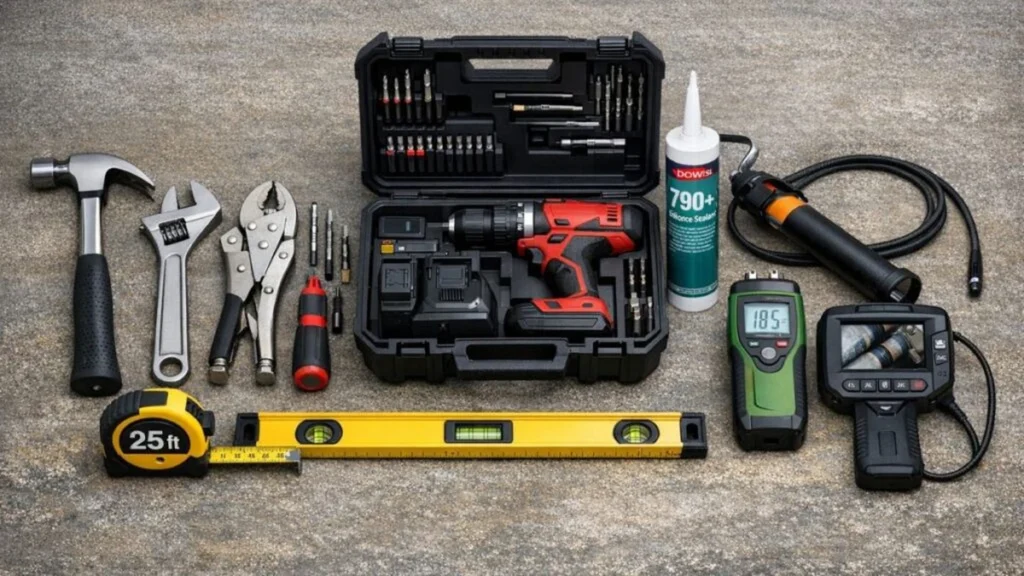
A DIY check costs almost nothing, because it needs only basic tools such as a torch, a spirit level and a tape measure. The trade-off is clear: a DIY check finds visible defects, while a professional inspection also finds hidden defects such as leaks behind walls, electrical faults and alignment problems that the eye alone cannot see.
Your Rights When the Developer Refuses to Fix Defects

Dubai Law No. 6 of 2019, Article 40, sets the liability periods for defects in a new home. The law gives the buyer a clear right to a defect-free home, and it sets two different periods. The first period covers structural defects, and the second period covers fixtures and finishes.
| Defect type | Liability period |
|---|---|
| Structural defects | 10 years |
| Fixtures and finishes | 1 year |
Source: Dubai Law No. 6 of 2019, Article 40.
The 1-year period for fixtures and finishes is the reason to book a second inspection in month 10 or 11, before the period ends. A second inspection catches defects that appeared after you moved in, such as paint cracks, loose tiles and leaks that only show with use. Log each new defect with photos and the exact location, and send the list to the developer in writing before the 1-year period ends.
If the developer refuses to fix a defect, escalate in writing and keep the snag report, the photos and every message as proof. A written record shows that you reported the defect inside the liability period. If the developer still refuses, file a formal complaint with RERA through the Dubai Land Department, using the Dubai REST app, and attach the defect report to the complaint.
DIY Snagging or a Professional Inspector
The choice between a DIY check and a professional inspection comes down to what you want to find. A DIY check with a checklist and basic tools finds visible defects, and it costs almost nothing. A professional inspection costs more, but the inspector brings tools, training and a trained eye for the defects that a first visit misses.
| Aspect | DIY check | Professional inspection |
|---|---|---|
| Cost | Almost nothing, basic tools only | AED 749-5,000+, before 5% VAT |
| What it finds | Visible defects | Visible and hidden defects |
| Tools needed | Torch, spirit level, tape measure | Moisture meters, thermal cameras, testers |
| Time | 1-2 hours | 2-4 hours, plus the written report |
| Best for | A quick first look | Handover, villas and off-plan units |
A DIY check finds visible defects. A professional finds hidden defects such as leaks, electrical faults and alignment problems. For a handover, the professional report is worth the fee, because it gives you a written record that the developer must answer.
Conclusion
Snagging is the last real check before you accept a new home in Dubai. Book the inspection before handover, log every defect with photos and the exact location, and send the snag list to the developer in writing. Dubai Law No. 6 of 2019, Article 40, gives the buyer a clear right to a defect-free home, with 10 years of liability for structural defects and 1 year for fixtures and finishes. Book a second inspection in month 10 or 11, before the 1-year period ends, to catch defects that appeared after you moved in, such as paint cracks, loose tiles and leaks that only show with use.
A professional inspection costs from AED 749 for a studio to AED 5,000 or more for a villa, before 5% VAT, and a DIY check costs almost nothing. If the developer refuses to fix a defect, escalate in writing and keep the snag report, the photos and every message as proof. If the developer still refuses, file a formal complaint with RERA through the Dubai Land Department, using the Dubai REST app, and attach the defect report to the complaint.
FAQs
What is snagging in Dubai?
Snagging is a handover inspection of a new home before you accept the keys. An inspector checks the unit against the sales and purchase agreement and logs every defect in a snag list for the developer to fix.
How much does a snagging inspection cost in Dubai?
Published price lists run from about AED 750 for a studio to about AED 2,600 for a villa, before 5% VAT. Prices vary by firm, so confirm the quote in writing before you book.
Is snagging compulsory before handover?
No law makes a professional inspection compulsory, but the law gives you the right to a defect-free home, and an inspection protects that right while the developer still holds
How long does the developer have to fix snags?
The developer must fix finish defects within the 1-year liability period. Structural defects carry a 10-year liability under Dubai Law No. 6 of 2019, Article 40.
What if the developer refuses to fix a defect?
Escalate in writing, keep the snag report, and file a formal complaint with RERA through the Dubai Land Department. Book a second inspection in month 10 or 11 so the 1-year
Can I do snagging myself?
Yes for visible defects, with a checklist and basic tools. A professional inspector finds hidden defects such as leaks, electrical faults and alignment problems that a DIY check misses.